

A Great repertory of Irish folk-lore is the Dinnsheanchus, which professes to account for the origin of names applied to various celebrated places in Ireland. Doubtless it furnishes a record of the most ancient traditions still preserved. It usually asserts, that the compiler never found it difficult to solve the mystery of those local designations.
Without citing any authorities, he sets off with some romantic legend—generally of the pagan times—and as imagination is allowed full play in the narrative, so are we expected to give implicit credence to the romance.
There is a good copy of the Dinnsheanchus in the Book of Ballymote, a well-known manuscript kept in the Royal Irish Academy.
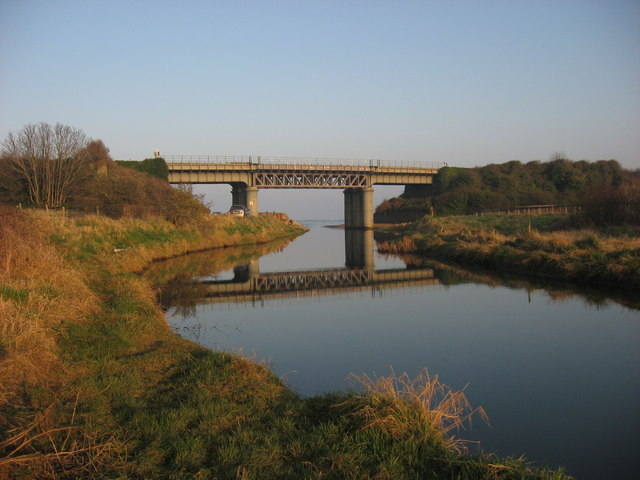
It may be premised, that the present River Delvin, which rises in Meath, and which falls into the Irish Channel at Gormanstown, north of Balbriggan, in the County of Dublin, was formerly called in Irish Inbher Ailbine. This is how it got the latter name, according to the topographer.
Long centuries ago, in that part of the country lived a prince, named Ruadh Mac Righduinn, son to the King of Fir-Muiridh, or the people of Muiredh, a plain in Bregia or Meath. He collected a crew for four currachs, to cross the sea, in order to visit his foster-brother, the son of the King of Lochlann or Scotland.
When the sailors reached the middle of the sea, however, they failed to move in any direction, but the currachs stood still, as if held by an anchor. Ruadh then went round that ship in which he sailed, to ascertain the cause for such detention. He jumped over its side, and then he went under the tide.
There he saw nine women, the fairest of the Nereid race. They were seated in three canoes, each boat holding three of those beauties. They took Ruadh with them, and for a time he was lost to his companions.
Those syrens had a charming territory under the waves, and abounding in all manner of delights. The prince remained nine nights; severally one night with each of those Naiads in their submarine land. One of these sea-nymphs became pregnant by him.
After that delay he was permitted to depart. However, he promised to visit them on his return, if he could. Ruadh then went to the house of his foster-brother, and remained with him seven years.
Then he returned, but he kept not his appointment; and, having no desire to live under the sea, he arrived at Muiridh.
The nine women then went to seek him, and having with them the son that had been born during his absence. They wished to be avenged of the father; but they met him not, and were denied access to the prince in his palace.
Stung with rage and despair, the mother then killed her own and Ruadh’s son. Afterwards, she flung his head on the shore; whereupon, all were terrified, and they said, as if with one mouth:
“Is oilb bine.” “It is an awful crime.”
Thence came the designation of Inbher Oillbine, or the River Oillbine.
An old Irish poem of twenty-four stanzas has been composed, and it recounts the substance of the foregoing legend. The name of Moymurthy, a manor and chapelry, in the parish of Moorchurch, near Gormanstown, preserved the traditional Muiridh territory down to a late period in the seventeenth century.