
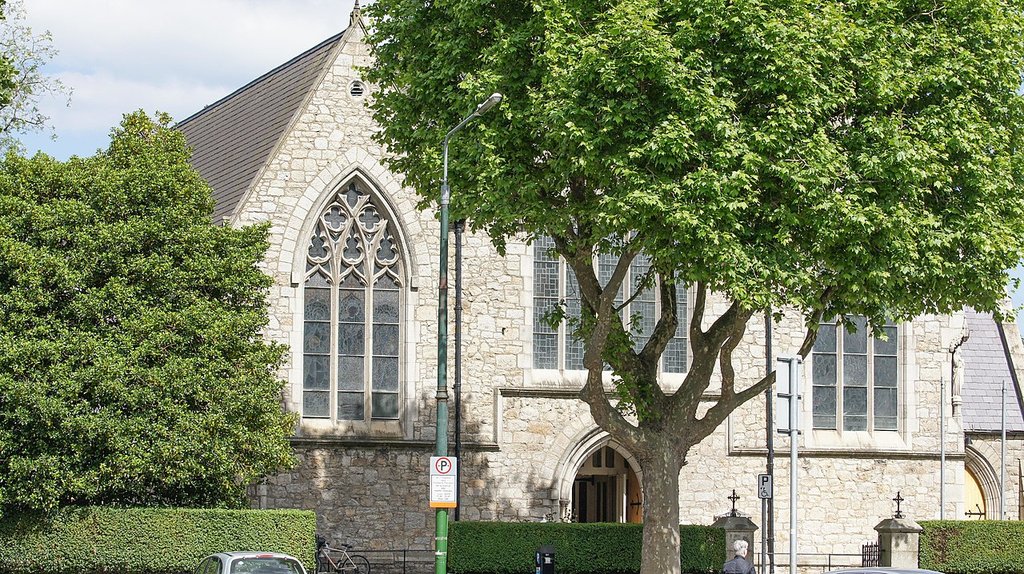


One of the best, most honest-minded and most industrious of men is John Kearns of Irishtown; and while engaged with his well-cared horse in drawing sand for some building improvements at the Star of the Sea Church, he put the following query to the superintendent:
“Did you iver hear the name of this place forty years ago?”
The uninformed person replied, that he did not.
“Thin it wint by the name of Scald Hill, afore Dean O’Connell the Parish Priest got the site from the Hon. Sydney Herbert, and thin he built the Star. And I’ll tell you besides a stranger thing nor that; for it was here the great Battle of the Cats took place, now a long time ago, and whin Father Corrigan was curate in the Parish, afore it was divided into three, Donnybrook, Haddington-road and Irishtown.”
This was an item of information never before conveyed to the superintendent and his men; so John Kearns was eagerly pressed to tell the story, and all present listened with great attention while he proceeded.
“Well thin, one fine summer evenin’ towards dusk, when Father Corrigan was comin’ home from a sick call to Irishtown along Simonscourt-road—it was a lonely place thin and few houses along the way—he obsarved an exthrordinary number of cats movin’ along, and mewin’ as if they were grumblin’ to one another, and he wondhered where they all kern from, bud he saw they were on the way ahead.
“Whin he came to Scald Hill, he found it all covered widh other cats, and many were still comin’ from different quarthers. There they all set up a thremindous howlin’ and screechin’. He thought it mighty quare intirely, but he was tired, and wint home to bed.
“No sooner was he there, than the noise kep’ on at such a rate, that niver a wink he could sleep until afther midnight. Thin the ruction seemed to be over, and he fell asleep, and didn’t waken until mornin’.
“Shure enough, ivery one of the Irishtown people hard the racket as well as Father Corrigan; bud early next day, word kem to him that the whole of Scald Hill was covered with the dead bodies of cats. They had a great battle over night, and kilt one another in hapes, nor was any of thim known to lave that place alive.
“Well, so great was the number, that it took six of Haig’s Brewery carts to remove and bury them durin’ the day; and the like of that battle was niver known afore nor since, for the cats kem from all parts of Ireland.”
That was a wonderful story, indeed, but one of the hearers inquired how John Kearns was able to prove that the cats came from all parts of Ireland.
“I’ll tell you the rason,” he replied. “One of thim was found wid a brass collar around its nick, and that had the name of a Galway lady graved on it, so you may be shure whin that was the case, others must have come from places quite as far away.”
Whether the inference warranted the conclusion or not may be questioned; but to have placed upon record such a narrative, relating to the earlier part of the present century and surviving to its close, must add one more to the quaint old popular traditions, now fast fading from the recollections and grasp of curious or interested folk-lorists.